In a restaurant, results are not measured in one evening but over a longer period.
Turning tables is important, but if it were the only objective, the model would be that of a fast-food canteen: attractive prices, quick service and modest quality. A good restaurant aims for something broader: the pleasant time customers spend at the table while savouring their dishes. It is this whole that makes the moment of dining pleasant and leads people to repeat the experience.
Good service, in fact, is made up of three times. Waiting time, which must be reasonable. Dining time, which must be pleasant, with dishes arriving at the right moment. And the time of emotions, which comes back to mind later and leads people to repeat the experience. A relationship with a broad customer base is built through collaboration between front-of-house and kitchen staff: front of house reads the rhythm of each table, the kitchen respects it and the customer remembers the overall experience.
This broadens the concept of turnover. It is not based on a single sitting, but on a longer period such as the month, during which customers return: they are the true intangible asset, which does not appear on the balance sheet but makes everything that is there earn a return.
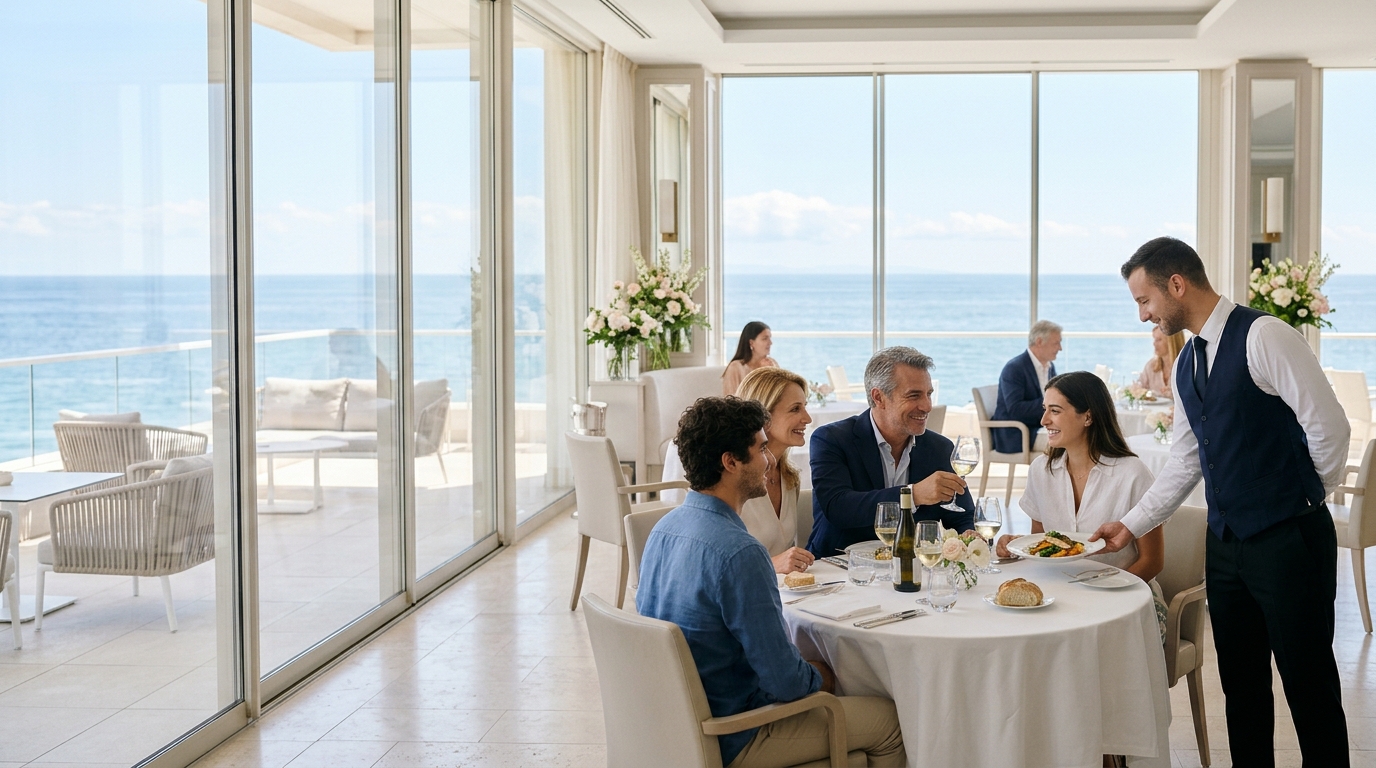
What is there is the restaurant’s invested capital: premises furnished from the entrance to the toilets, plates and cutlery, the lighting that creates the atmosphere. These are the resources used directly with the customers who enjoy the service. A dining room filled with regulars makes them earn a return; a half-empty one leaves them idle. Front-of-house and kitchen staff can do a great deal about this. About the mortgage on the premises or the bank’s terms, however, they can do nothing.
For an SME, invested capital works in the same way. Its return depends on two factors: the average sales margin and how many times it turns over during the year.
The problem is that, in its accounting form, invested capital is a concept far removed from operations, because it brings together trade receivables, tax credits, inventory and equity investments, capital equipment and cash. Presented like this, it means little to operational staff. And if something has little meaning, it is not important and therefore it is not managed.
Completeness, in fact, is the enemy of effectiveness. To be a parameter for operational use, invested capital must have a direct link with core operations, and people must be convinced that their good work improves things. That is why its operational configuration is limited to three main line items.
The first is trade receivables. Payment terms that are honoured, prompt invoicing, the handling of complaints and payment reminders, with sales and administration acting to close them quickly.
The second is inventory. Stock levels, purchase lot sizes, production scheduling and slow-moving products are in the hands of purchasing, production and logistics.
The third is the part of fixed assets used directly with customers. In the restaurant, these are the premises, the furnishings and the tableware; in other businesses, they may be the coffee machines lent to cafés or any other equipment entrusted to customers. Their return depends on how much customers use them, and therefore on the quality of service provided by the people who look after those customers every day.
Everything else should be left out. Financial assets and liabilities, tax receivables and payables, and other minor line items, because they distract attention and depend on the owners’ decisions, or only indirectly on operations. Asking the warehouse manager to deal with them would be like involving the waiter in paying the restaurant’s mortgage instalment.
Let’s take an example, going back to the company with €10 million in revenue from the piece dedicated to comparison with competitors. Trade receivables of €2.5 million, around ninety days to collect. Inventory of €2 million. Assets serving customers of €3 million. Operating invested capital is €7.5 million and, with an operating margin of €750,000, it earns a 10% return.
If sales and administration bring collection back to sixty days, and purchasing and production reduce stock by €500,000, capital falls to around €6.1 million. The return rises above 12% without selling a single extra euro, and around €1.4 million becomes available in cash again. And if the same assets serve satisfied customers who buy more often, revenue grows with the same capital: this is turnover over the month, that of the restaurant frequented by its regulars.
Getting there does not require a complex report. All you need is a framework with three line items, each with its own indicator expressed in days or as a percentage, compared with the previous month and with the target. Simplicity and focus are decisive, because when these line items have a cohesive team managing them, everything else works.
Would you like to receive these bite-sized insights directly? Follow us on LinkedIn @Pietro Cavalli so you don’t miss a single piece of the journey.
Kenning Consulting accompanies small and medium-sized businesses in building a growth plan supported by management control tools tailored to their development stage.